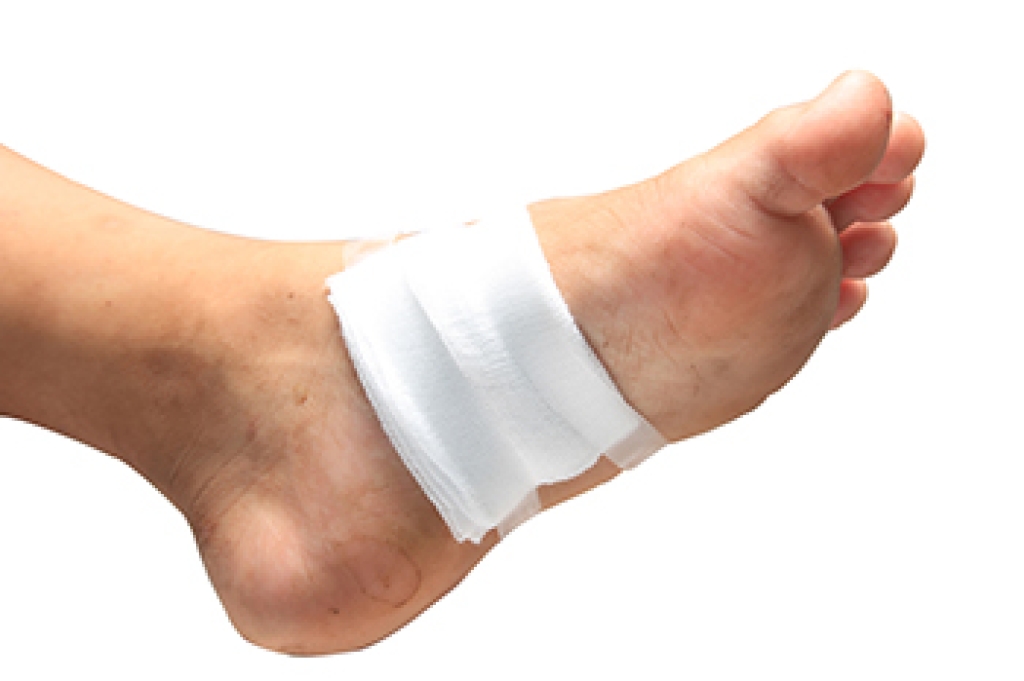
A foot puncture wound occurs when a pointed object pierces the skin and leaves a small entry hole. Nails, glass, and needles are frequent causes. Unlike a cut, a puncture can extend deep into the foot while looking minor at the surface. The object can also push dirt, pieces of sock, or shoe material into the wound. These trapped materials can damage soft tissue and raise the risk of infection. Walking barefoot increases exposure to sharp objects, but a puncture can also pass through a shoe. The wound’s depth and the object’s cleanliness both affect its severity.
Prompt evaluation is important because patients cannot always tell how deeply an object has entered the foot. A retained piece of material can remain hidden beneath the skin. Infection can develop in the skin and spread to a joint or bone. Warning signs include increasing pain, redness, and swelling. Drainage, warmth, or fever can also signal a problem. Diabetes, poor circulation, and reduced feeling in the feet increase the chance of serious complications. A wound that seems small can therefore require urgent attention, especially when the object broke off inside the foot or was dirty.
A podiatrist can examine the wound, determine its depth, and look for damage to nearby structures. The podiatrist can clean the injured area and remove material left beneath the skin. X-rays can reveal foreign objects or bone damage. Other imaging tests can locate materials that do not appear on an X-ray. Treatment includes protecting the foot from pressure and monitoring the wound. The podiatrist can check for infection and decide whether further care or surgery is required. Follow-up visits help confirm that healing is progressing and no hidden material remains. Early care lowers the risk of infection, painful scarring, and lasting damage. If you have a puncture wound on your foot, it is suggested that you schedule an appointment with a podiatrist for effective relief and treatment solutions.
Wound care is an important part in dealing with diabetes. If you have diabetes and a foot wound or would like more information about wound care for diabetics, consult with Leonora Fihman, DPM from California. Our doctor will assess your condition and provide you with quality foot and ankle treatment.
What Is Wound Care?
Wound care is the practice of taking proper care of a wound. This can range from the smallest to the largest of wounds. While everyone can benefit from proper wound care, it is much more important for diabetics. Diabetics often suffer from poor blood circulation which causes wounds to heal much slower than they would in a non-diabetic.
What Is the Importance of Wound Care?
While it may not seem apparent with small ulcers on the foot, for diabetics, any size ulcer can become infected. Diabetics often also suffer from neuropathy, or nerve loss. This means they might not even feel when they have an ulcer on their foot. If the wound becomes severely infected, amputation may be necessary. Therefore, it is of the upmost importance to properly care for any and all foot wounds.
How to Care for Wounds
The best way to care for foot wounds is to prevent them. For diabetics, this means daily inspections of the feet for any signs of abnormalities or ulcers. It is also recommended to see a podiatrist several times a year for a foot inspection. If you do have an ulcer, run the wound under water to clear dirt from the wound; then apply antibiotic ointment to the wound and cover with a bandage. Bandages should be changed daily and keeping pressure off the wound is smart. It is advised to see a podiatrist, who can keep an eye on it.
If you have any questions please contact our office located in Encino, CA . We offer the newest diagnostic and treatment technologies for all your foot and ankle needs.
